All Categories
Featured
Table of Contents
The difficulty frequently can be found in attempting to identify the offender. Of course, we all understand the most typical arbitrator of garden mayhem and destruction is wildlife. Usually this type of insect leaves a trail a mile wide: one that is marked by excessive damage to foliage, knocked over planters, and fluffy bits of fur in the mangled remains of cherished plants.
Fine mesh netting tossed over fruit bushes helps avoid bird attacks. My recommendations is to consume bunnies, deer, and some of the birds that get in the method.
Nevertheless, my dog's breath might be bottled as a highly powerful chemical weapon, so I'm not stopping him from munching on the spearmint plants. To be truthful, isn't your feline the factor you planted the catnip in the first place? Keep in mind that family pets likewise work rather well as a squirrel deterrent.
Simple Steps for Identifying Lawn Blight Symptoms
Slugs are nondiscriminatory eaters that can defoliate a variety of flowers in a shockingly brief amount of time. The ones in my lawn are specifically fond of pansies and violas. Their fat, slimy carcasses are usually found prowling under unused garden pots. These insects are nonetheless are simple to fight with crushed up egg shells that were conserved from breakfast.
They will do anything for cheap beer, even accidentally drown themselves in order to get it. You must get a lot of empty plastic cups and cut them off about two inches from the base.

Or, if you have actually a currently opened can that went flat before you might complete it, use that. Bury the beer filled cups in your garden. The slugs will party all night and be dead in the early morning. A less useful however fun way to get rid of slugs is to run around late during the night equipped with a salt shaker and a flashlight in order to melt the repellent boogers.
Easy Tips for Detecting Garden Disease Signs
Some people have even supposedly battered up the slug armies in their yard, fried, and eaten them. Nibbling garden slugs is probably not an excellent idea unless you understand yours are the edible kind, but is still a fascinating way to get rid of them all the very same. Should the absolutely defoliated plant in concern be a tomato bush, watch out for a caterpillar with a surged behind that goes by the apparent alias of 'tomato hornworm'.
This is really disheartening at initially, the good news is that tomato plants generally recover. If a cloud of white bugs flutter around when you're examining a worthless looking plant, they're probably the culprit.
If the issue is strange squiggly lines on the leaves of a lot of plants, then the perpetrator is leaf miners. Leaf miners are similarly irritating but don't typically kill plants outright.
Although a variety of gardening publications have attempted their best to convince me that ants will not harm my garden, I discover this to be fatal inaccurate. It's not a surprise that I have cleared containers after their plant inhabitants passed away just to discover giant ant nests hiding within. If the ants weren't bad enough by themselves, they likewise are such industrious monsters that they frequently farm aphids! That makes everything 10 time worse.
Diagnosing Lawn Diseases before They Destroy Your TurfHow to Spot Common Garden Pests in 2026
In both instances, I suggest high powered organic bug spray, such as the kind with Neem or Pyrtherum. Although tansy is stated to prevent ants, I fail to see the proof in my own lawn. For trees and tree-like plants in containers, saving the plant from an ant infestation is a lengthy, uncomfortable process.
You need to thoroughly dig up your plant, and then shake the roots totally free of all dirt. Next, place the plant in a container complete of water in order to soak out all the bugs.
Hopefully, these issues can be easily determined and treated with the abovementioned ideas, so that they no longer plague garden enthusiasts.
Covers pesticide safety and toxicity, securing bees, adjuvants, mixing tables, calibration and biological control. Other sections cover a wide range of farming and nonagricultural items. Each area explains pests, the damage they do, and advised management.
Effective Ways to Get Rid of Lawn Plants
When you remain in the garden picking homegrown produce and discover telltale bite marks on your plants, opportunities are you have insect bugs. Understanding what you're handling when it concerns bugs permits you to choose the best pesticide for eliminating those uninvited dinner guests. These 20 typical garden nuisances target edible crops, ornamentals or both: Numerous types of this sap-sucking, winged pest exist.
They assault edible and ornamental plants, consisting of garden roses, causing stunted growth, curling and yellowing leaves, and a honeydew buildup that causes black, sooty mold. Honeydew produced by aphids brings in ants So include them in your treatment strategy. Check out more about controlling aphids. Acknowledged for the protective bags they produce that suspend from different types of trees, bagworms can defoliate trees if an infestation is heavy.
Read more about managing bagworms. Green, hairy cabbageworms have a silky look and a row of light spots along their backs. These starved feeders consume veggie plant leaves, producing large, irregular holes, typically along the midrib. When feeding on cabbage, these worms bore directly into the head. Their excrement consists of greenish-brown pellets.
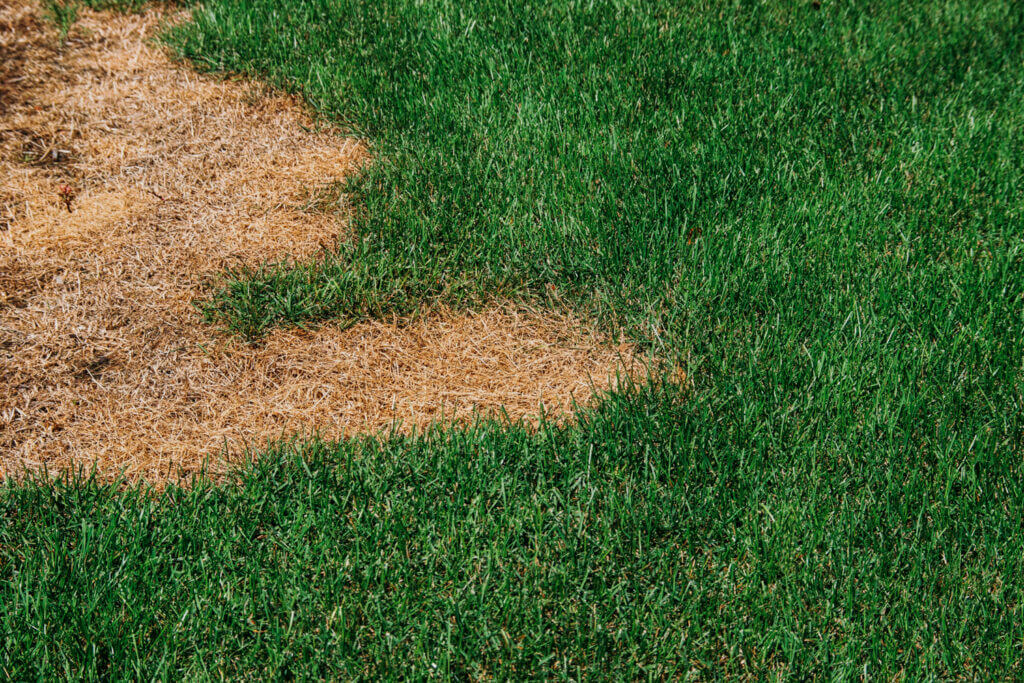
Simple Steps for Identifying Lawn Blight Signs
The adult kind, the imported cabbageworm butterfly, is simple to area. It's white, with one to four black areas on its wings. Find out more about controlling cabbage worms. Loud bugs that buzz, cicadas are typically incorrectly called locusts. After they emerge from the ground and climb trees to molt, their outer skins stay hanging from tree branches or drop to the ground.
Distinct 1/2-inch-long yellow bugs, Colorado potato beetles include black, brown and yellow stripes on their wing covers. Female beetles lay clusters of bright yellow-orange eggs on the undersides of the leaves.
Find out more about controlling Colorado potato beetles. Ravenous worms with a propensity to feed on the pointer area of corn, corn earworms also assault tomatoes, fruits and bean pods. They leave comprehensive brown excrement around their feeding areas. Mature worms are 1 1/2 inches long with many tough microspines. They vary in color from brown or pale green to light pink.
Diagnosing Lawn Diseases before They Destroy Your TurfAre These Lawn Insects Ruining Your Turf?
As grownups, these bugs damage plants by feeding on leaves, soft fruits, shoots and blossoms. As larvae, they feed on roots, leaving plants prone to wind damage.

Latest Posts
How To Begin Your First Meeting With Amsterdam Dating Coaches
Lawn Blight Warning Signs and Quick Cures
Understanding the Signs of Diseases and Fungus